
What makes a control panel last — six things to ask before you sign off
Most panel failures are decided at the design stage, not the installation. Six questions that separate a 10-year build from a 2-year replacement.
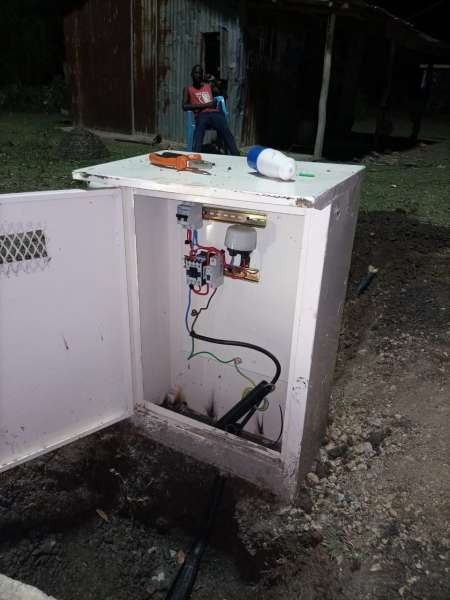
We’ve opened up a lot of failed panels over the years. Almost none died from genuine bad luck. Almost all of them died from one of six choices made on the design table.
1. The enclosure rating matches the worst-case environment
Indoor IP54 panels installed outdoors are a leading cause of premature failure. If the panel sees direct sun, rain, or dust, it needs to be IP55 minimum — IP65 if it’s anywhere humid. And: no top-entry glands. Water finds a way past any glanded penetration on the top surface within five years.
2. The components are Tier-1, in stock locally
The cost difference between a Schneider iC60 breaker and an unbranded clone is about 800 KES. The cost difference five years from now, when the clone has failed and there’s no replacement that fits the busbar, is the whole panel. Tier-1 (Schneider, ABB, Hager, Siemens, Eaton) means the part will still exist in five years, and a Nairobi sparky will know what to do with it.
3. There’s thermal headroom on the busbar
A panel sized to the actual load with no margin will run hot, derate, and trip nuisance-fault on the hottest day of the year. We size busbars and breakers with 25% headroom over peak measured load — not over the expected load on the spec sheet.
4. Every wire has a ferrule, every terminal a label
This is the one that separates a 10-year build from a 2-year build. Bare-stripped multi-strand wires loosen, oxidise, and eventually arc. Ferrules add 30 minutes to a panel build. A labelled terminal block means the next technician (who isn’t you, and isn’t reading your mind) can replace a breaker without tracing every wire from scratch.
5. The schematic is laminated inside the door
If the schematic only exists on someone’s laptop, it doesn’t exist. Every panel we hand over has a printed, laminated, A3 schematic clipped inside the door — labelled with the panel reference, the install date, and the components used. Every modification gets noted on the schematic before the door closes.
6. There’s a soft-start on every motor over 5.5 kW
Direct-on-line starting on anything bigger than that punches a 6–8x in-rush current spike. That spike hammers the contactor, the cable, and the motor windings. A soft-starter or VFD adds 15–20% to the motor-circuit cost and triples the motor’s life. On a borehole pump that runs daily, the payback is under two years.
How we test before hand-over
Every panel ships with a written commissioning report — insulation-resistance reading per circuit, breaker trip-curve verification, contactor pull-in voltage, and an actual phase-by-phase load reading with the system running. The report goes in the schematic pouch. If something fails inside the warranty, that baseline tells you exactly what changed.
Got a panel that’s giving you trouble, or a project where you want this kind of build from day one? Talk to us on WhatsApp.