
Sizing a borehole pump — the cheat sheet
Yield, head, voltage drop, and the killer — dry-running. A practical guide for facilities managers who keep getting handed broken pumps.
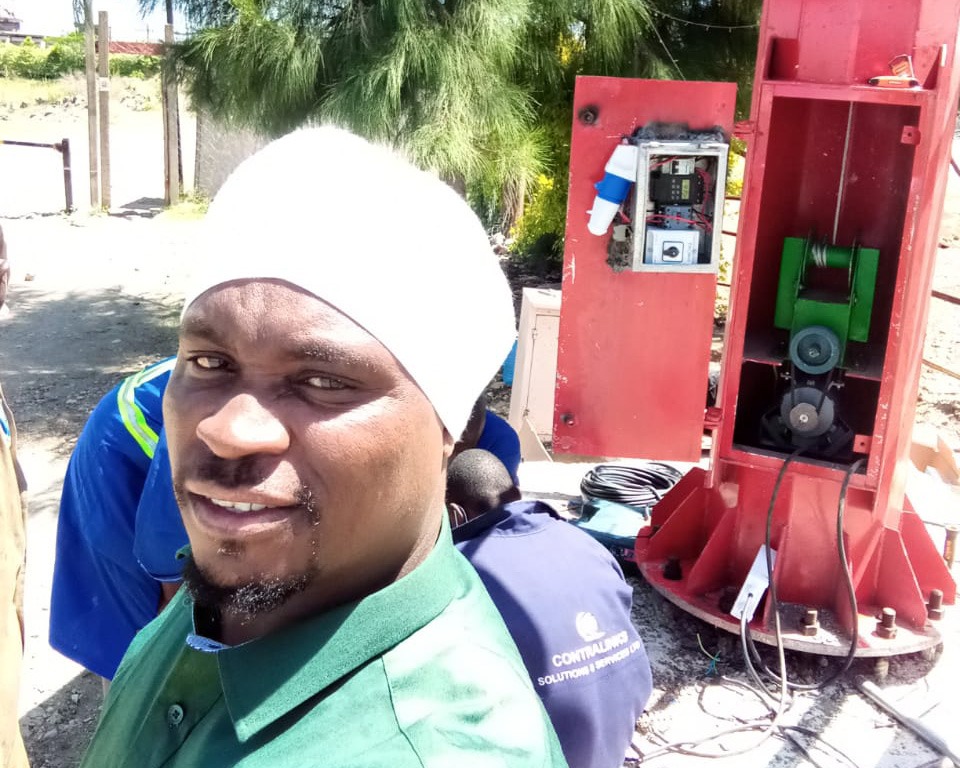
Most failed boreholes we get called to look at didn’t die from the pump itself. They died because somebody sized the pump for the theoretical yield on the drilling report rather than the sustained yield over a full day’s draw.
The four numbers that matter
- Sustained yield (m³/hr). Not the test yield — the figure the borehole holds after eight hours of pumping. Always lower. If your driller didn’t give you a sustained-yield reading, ask for one before sizing the pump.
- Total dynamic head (TDH). Static water level + draw-down + the height the water has to be lifted to reach the storage tank + friction losses in the riser pipe. Friction is the one people forget; with a long thin riser it can add 8–12 m to the figure you’re sizing against.
- Voltage at the panel under load. Not the rated mains voltage — the actual voltage at the panel when the pump kicks on. Long cable runs and undersized cores drop voltage fast; a 380 V three-phase pump that sees 340 V at start-up will burn out within months.
- Daily draw vs daily yield. If you need 12 m³ a day and the borehole sustains 1.5 m³/hr, you have an eight-hour pumping window — and zero margin for the borehole to recover. Size the pump below the sustained yield, not at it.
The killer: dry-running
By far the most common failure mode we see is dry-run damage. The pump out-paces the borehole, the water level drops to the pump intake, and the motor spins in air for an hour before anyone notices. Submersible motors are cooled by the water around them — no water, no cooling, fried windings in minutes.
Every panel we build ships with a float-switch on the storage tank and a dry-run protector on the pump (an electrode probe, a current-sensing relay, or both). Cost: under five thousand shillings. Pump replacement cost: forty times that.
What we actually do on a sizing job
- Read the driller’s test-yield report — and if it’s only a 1-hour test, ask for an 8-hour repeat before quoting.
- Measure static water level ourselves on the day of the survey.
- Map the route from borehole to tank, calculate TDH including pipe friction.
- Check the cable run from panel to pump-head — measure the actual core size, not what the spec says.
- Pick a pump rated below sustained yield, not at it, so there’s a safety margin.
- Spec the panel with dry-run protection, soft-start (saves the motor and the genset), and a properly-rated breaker — not whatever was on the shelf.
Get those six right and the pump runs quietly for ten years. Get them wrong and you’ll be sizing a replacement pump within eighteen months.
Got a borehole that keeps eating pumps? Send us the driller’s report and a couple of site photos and we’ll tell you whether it’s a sizing problem or something else.